Agricultural Transition Parcels: Guidance from Commercial Land Appraisers Elgin County
Agricultural land along transportation spines in Elgin County is shifting from pure production to mixed roles: continued farming for income today, and positioned for commerce, logistics, light manufacturing, or residential growth tomorrow. These transition parcels can carry two sets of realities. One set is visible in the field, the soil capability, tile drainage, existing leases, windbreaks, and the line of sight to the nearest interchange. The other set lives in plans, policies, and servicing maps, the Official Plan, transportation studies, water and sewer capacity schedules, conservation authority regulations, and long range growth allocations. Valuing them demands both boots on the ground and fluency with policy. As commercial land appraisers in Elgin County, we see where judgments go right and where they go sideways.
This piece unpacks how professionals think through agricultural transition parcels, what affects value, and how owners, lenders, and buyers can move with confidence. The perspective comes from the way commercial real estate appraisers in Elgin County evaluate risk, timeline, and plausibility of change, not just the acreage and a postcard view.
The pivot point: highest and best use with a clock attached
Every valuation decision starts with highest and best use. For a transition parcel, that use is rarely a single label, it is a sequence. Today the land may be farmed for cash rent with minimal improvements. In three to seven years the road might be upgraded and a secondary plan could designate employment lands. Ten years out, a serviced business park may be feasible. The value hinges on which stage is most probable and the time required to get there.
Four tests govern this analysis: legal permissibility, physical possibility, financial feasibility, and maximum productivity. Agriculture typically passes all four. A future commercial or industrial use may pass the first three on paper yet fail the fourth because the time and capital required erode returns. We model that arc rather than inserting a straight line from corn to warehouses. When commercial building appraisers in Elgin County talk about the “clock,” they mean absorption rates, infrastructure timing, and policy milestones that dictate when the next use actually becomes viable.
A common mistake we see: applying serviced commercial land values to unserviced farmland simply because a corridor is “hot.” Without water, sewer, reliable three phase power, and approved access, the site is not yet equal to those sales, even if maps show a future designation. The spread between unserviced and serviced can be wide. Bridging that spread requires evidence, budgets, and time.
Where policy meets dirt: the documents that move value
If you own or are considering a transition parcel, spend time with the planning stack. It is not glamorous, but it is determinative.
- The County and local Official Plans set land use designations and growth areas. Proposed amendments signal intent but do not create value on their own.
- Secondary plans dive into block layouts, collector roads, stormwater strategies, and land use mixes. When we see a parcel squarely within a secondary plan, the probability of change increases.
- Zoning by law controls permitted uses and performance standards. Even a light industrial designation in the Official Plan does not bypass the need for zoning that allows your building program.
- Provincial policy affects whether conversions from agriculture to employment land align with overall targets. It also shapes how quickly approvals move.
- Conservation authority regulations and floodplain mapping can redraw usable areas in a blink. We have watched projects lose a third of their net area because of a revised flood line.
- Servicing master plans and capacity statements decide if growth can be timed with budgets. A corridor with no near term sewer capacity is a different valuation story than a site with twinned mains at its doorstep.
We track these documents in real time. When commercial appraisal companies in Elgin County price transition sites, they spend at least as much energy verifying policy status and service timing as they do pulling sales.
Physical factors that quietly move the needle
On paper, two farms might look similar, both 50 acres near an interchange. Up close, value starts to diverge.
Soils and drainage matter. Prime Class 1 or 2 soils with systematic tile drainage support better cash rent and carry less risk of surface ponding that complicates site development. Slopes, knolls, and depressions influence grading quantities. Shaving 200,000 cubic metres off high ground to fill low ground will erase a good portion of a land lift. Tile maps are gold, not for romance, but because tile patterns reveal subsurface decisions you will live with when you cut roads or lay sewer.
Frontage and access play hardball. A deep farm with limited frontage on a county road can be difficult to subdivide into marketable blocks. Intersection spacing standards matter. If sightlines are poor or if spacing to the next access is tight, you may be stuck with one entrance for the entire frontage, and that chokes some commercial uses.
Easements and encumbrances deserve more attention than they get. High voltage lines, pipelines, gas easements, and drainage ditches all have cross sections you cannot build on. Hydro corridors can be an amenity for logistics users who like wide turning radii, or they can sterilize a portion of the land. We model the net developable area rather than quoting a price per gross acre and hoping the problem resolves later.
Environmental and cultural layers can catch seasoned players unaware. Species at risk habitat, wetland boundaries, archaeological potential, and proximity to natural heritage systems must be screened early. In parts of Elgin County, archaeological assessments are routine before disturbance. Ignoring them because neighbouring fields were fine is not a strategy.
The valuation playbook: income now, options later, and the timeline between
There is no one formula for transition land. Our toolkit involves three vantage points, then reconciliation.
Agricultural income provides a floor. We analyze current and market cash rents, crop rotation, and input sharing if any. Most parcels in the county rent on a per acre basis with the farmer bearing operating risk. We capitalize the stabilized rent at a rate that reflects the risk and liquidity of agricultural investment in this submarket. The capitalization rate is often higher than for urban commercial property and tends to move with commodity cycles, interest rates, and local demand for ownership by farm operators.
Comparable sales provide benchmarks up and down the transition spectrum. Pure farmland sales, unserviced land inside growth boundaries, partially serviced tracts, and shovel ready lots each tell part of the story. We adjust for size, frontage, timing of services, approvals in hand, risk, and market conditions. The best comps are never perfect, but they are honest and recent, and we verify grantors and grantees to catch assemblages or non arm’s length deals.
Residual land analysis and discounted cash flow come into play when the parcel has a credible path to serviced lots or turn key sites. We underwrite development revenues based on market evidence, deduct hard and soft costs including contingencies and developer profit, and discount back over the expected timeline using a rate that captures entitlement and market risk. Minor tweaks in assumed timing can dwarf major arguments about per foot pricing, so we stress test timelines.
We often reconcile to a value that is above agricultural-only but below fully serviced commercial land. That spread quantifies risk and time. When lenders read reports from commercial real estate appraisers in Elgin County, they pay special attention to that spread and the assumptions that justify it.
A tale of two corners: how small differences grow large
A corner near a county road and a provincial highway feels like a slam dunk. Two owners came to us a few years apart with near mirror images. Each had 40 to 60 acres, field entrances on two sides, and reasonable proximity to existing industrial development. One corner sat inside a newly expanded settlement boundary with a secondary plan adopted and a committed capital plan for a water main loop within four years. The other corner lay just outside the boundary. It would require a boundary expansion to be developable for employment use.
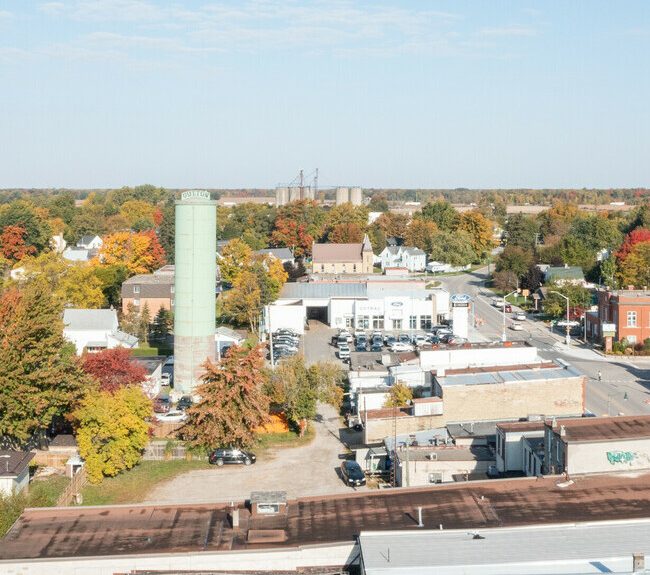
On paper, both were transition sites. In practice, the inside corner was appraised closer to partially serviced land, with a value premium justified by specific timing and policy. The outside corner, even with equal soils and better frontage, was closer to agricultural with a speculative layer. A subsequent decision to allocate scarce sewer capacity toward residential growth, not employment, confirmed the gap in our earlier values. Similar pictures. Different clocks.
The role of servicing in turning plans into value
Servicing is the hinge on which these valuations swing. Water supply, sanitary capacity and outlets, stormwater management that can work at a block scale, road capacity and classification, and power availability define usable, marketable land. Most owners underestimate the extent of off site costs they will be expected to share. A pump station two concessions away or an upgraded trunk, even if cost shared, adds years and seven figures.
Power needs are changing. Light industrial tenants that once lived with single feeds now ask for redundancy or higher available kVA. Solar arrays or on site storage can help, but tapping a local feeder with available headroom beats retrofitting every time. Appraisers do not design systems, but we ask utilities for capacity letters and timelines. When they push back with caveats, we do not gloss over them.
Stormwater is the sleeper. Older business parks used dry ponds and treated each lot. Newer frameworks favour integrated stormwater facilities and low impact development across blocks. If your parcel has the topography for upstream ponds that benefit neighbours, you may negotiate cost sharing. If not, you may face over excavation to create volume. We reflect those burdens.
Municipal tools that accelerate or stall transition
Municipality led moves like planned capital works, Development Charges bylaw structures, or Community Improvement Plan incentives can change the math overnight. Where a municipality programmes employment land servicing with a transparent cost sharing regime, market confidence rises. In contrast, places with unclear or frequently shifting fee schedules scare lenders, and that shows up in discount rates and required developer profit.
Occasionally, Minister’s Zoning Orders have shortened timelines, but they do not conjure capacity where none exists nor do they bypass conservation regulations. We caution clients against overpricing on the strength of extraordinary approvals. If servicing, financing, and market demand are not aligned, an expedited zoning certificate becomes a decorative stamp.
Taxes, HST, and assessment issues buyers forget to price
On agricultural holdings, sellers and buyers often assume savings that evaporate after a change in use. Harmonized Sales Tax can apply to land transactions with certain elections available, and the farm property class tax rate may change upon severance or change of use. Post development, current value assessment recalibrates. If you hold entitled but unserviced land for years, the assessment authority may still increase assessed value based on market evidence of future use. We have seen carrying costs climb while projects wait for infrastructure, which drags on net present value. Work with counsel and your accountant early, not at the term sheet stage.
Leases and encumbrances that look small, but are not
Wind, solar, and telecommunication leases are common on rural lands. They provide steady income and, in some cases, enhance the site with power improvements or access roads. They can also complicate subdivision lines, drive setbacks, or trigger equipment removal clauses that outlive the original term. Grain bins, barns, or tile mains placed by a tenant may carry removal or compensation obligations.
Pipeline easements and municipal drains are more rigid. Crossing agreements can be time consuming and costly. Expandable business parks rely on clean blocks. If every second acre is slashed by a dormant right of way, your marketability falls. We appraise the net, not the dream.
Working with lenders who have seen a few cycles
Lenders in Elgin County that finance transition land divide deals into buckets. Some will fund on agricultural value alone, ignoring upside. Others will advance on a blended value if approvals are advanced and off site servicing is funded. Almost none will underwrite fully to an as if serviced value unless pipes are in the ground and capacity is confirmed. The distinction matters for owners planning to refinance after an Official Plan amendment. Paper victories without infrastructure do not unlock higher loan proceeds in conservative shops.
Debt costs shape land bids. A rise of 150 to 250 basis points in borrowing costs will flatten the residual value of land more than some buyers expect, especially when absorption for the end product is modest. When commercial building appraisal in Elgin County reads frothy, we audit assumptions about exit cap rates, pre leasing strength, and tenant incentive packages for the ultimate buildings. End users who buy and build for their own operations can pay more than land bankers, but they still watch carrying costs.
Two short checklists that prevent long regrets
Due diligence can be broad. Focus on the handful of items that, in our experience, make or break the story:
- Confirm designation, zoning, and secondary plan status in writing, and read the mapping for your exact parcel, not the general area.
- Source letters on water, sewer, and power capacity with timing, not just conceptual diagrams.
- Map all encumbrances and regulated areas, then calculate net developable acres, not gross.
- Budget off site costs and cost sharing, with ranges and contingencies that reflect recent tender prices.
- Interview the farm tenant and review lease terms, including termination and crop removal, before you set closing dates.
For owners considering a sale, depth of preparation improves pricing and reduces retrades:
- Commission a survey, tile map if available, and a planning opinion letter that speaks to timing and likelihood.
- Identify any leases, easements, or licenses and gather the documents in a single package.
- Request a preliminary environmental scan, including aerial photo review and fuel storage history.
- Speak with the municipality about access spacing and upgrades; document the conversation.
- Decide on zoning or plan amendment strategy and whether to sell conditional on approvals or as is.
How we reconcile variability in a thin data environment
Transition land markets are thin by definition. Sales are sparse, and no two are identical. That does not grant permission to guess. It requires triangulation. When commercial land appraisers in Elgin County approach a file, we begin with the most defensible floor, usually the agricultural income approach, then test upward pressure with comparable sales of similar policy status and servicing level. Only when the path to a higher use has tangible milestones do we introduce discounted cash flow for a more aggressive layer of value.
We interview planning staff. We verify utility statements. We call conservation authorities. We ask contractors for ballpark costs with the understanding they are not binding, then we stress them upward. We analyze exposure time and marketing periods because liquidity matters. Land that will sit 12 to 24 months to find the right buyer deserves a liquidity discount compared to a ready lot.
We acknowledge uncertainty. Reports include ranges where the market is moving quickly or where a single large buyer skews pricing. Clients sometimes seek a single number with false precision. We will not give one where two or three scenarios are more honest.
Where building appraisal work intersects land valuation
Some transition parcels are acquired by users who intend to build sooner rather than later. For them, commercial building appraisal in Elgin County becomes relevant once construction is contemplated. The cost approach, market rent analysis for the planned improvements, and a stabilized income value for the finished facility all feed back into how much they can afford to pay for land. We have seen users overcommit to land, then scramble to shave building costs, only to compromise functionality. Reversing the sequence saves pain. Define the building program and its economics first, then let the residual dictate a maximum land price.
Commercial building appraisers in Elgin County regularly advise on shell depth, bay sizes, dock ratios, clear heights, and parking counts that resonate with local tenants. Those metrics influence site coverage and therefore land take. A 32 foot clear modern logistics user has different stacking needs than a light assembly shop. Getting this right early sharpens both appraisal and acquisition decisions.
Practical anecdotes from the field
An owner north of a village sought an appraisal on 80 acres after a draft settlement boundary expansion was floated. They hoped values would mirror serviced land two concessions closer to the highway. Our calls revealed that water capacity was allocated to an https://realex.ca/about-realex/ existing backlog and that a new well, if viable, was beyond the municipality’s five year plan. The conservation authority had flagged part of the site for further wetland review. We supported a value moderately above agricultural based on designation momentum but far below serviced comparables. Six months later, the village council deferred the boundary expansion pending servicing clarity. The owner later secured a healthy farm rent increase, recognizing the interim income would carry them longer. Expectations adjusted early prevented a blown sale process.
Conversely, a 45 acre parcel inside a newly minted secondary plan showed a different trajectory. The municipality had budgeted for a trunk sewer extension within three years, the county was reconstructing the intersecting road with urban cross section standards, and a nearby transformer station had spare capacity. We modeled a phased development over six to eight years with a discount rate reflecting entitlement risk dropping as milestones were achieved. Offers received within the next year came in near the upper end of our range. Evidence and timing won the day, not speculation.
Your team and timing matter more than slogans
The best outcomes involve coordination. Planning consultants who know local staff and the cadence of council matters. Civil engineers who have designed actual extensions in the same municipality. Environmental firms who can separate real constraints from fixable ones. Brokers who have placed industrial and commercial users recently, not three cycles ago. And commercial appraisal companies in Elgin County that will defend the analysis when lenders and investment committees ask hard questions.
If you own land with transition potential, start earlier than you think. Simple steps like securing a clean survey, documenting leases, and requesting capacity letters take time. If you are buying, build a timeline that recognizes approvals and utilities, not just optimism. If you are lending, require appraisal work that spells out assumptions and presents sensitivity analysis.
The market rewards clarity, patience, and realism. It punishes wishful arithmetic.
Final thoughts for Elgin County owners, buyers, and lenders
Agricultural transition parcels live at the edge of two worlds. They feed families today and may host employers tomorrow. Value sits in the space between, anchored by current income and pulled by plausible future use. For owners, this means stewarding the farm while curating a paper trail that proves the path forward. For buyers, it means reading policy as closely as soil maps and paying only for what you can verifiably achieve within your hold period. For lenders, it means financing what is, not what might be, unless milestones convert possibility into probability.
Commercial land appraisers in Elgin County do not make markets. They measure them. The tools are well known to practitioners, but the craft is in weighting each input for a specific parcel at a specific time. Get that weighting right, and you will avoid overpaying on a hot rumour or underselling a site on the cusp of real change.