Cost vs. Value: Navigating Commercial Real Estate Appraisal in Waterloo Region
When a lender asks for an appraisal on your industrial condo in Kitchener, or a purchaser wants to validate the price of a mixed use building near Uptown Waterloo, the conversation quickly slides into a tangle of concepts. Cost, price, and value are not the same thing, and the differences matter most when decisions are fast, capital is tight, and the market is in motion. In Waterloo Region, where institutional investors and family offices shop the same corridors as local entrepreneurs, that distinction shapes lending terms, tax assessments, deal certainty, and even renovation plans.

I have sat at boardroom tables in Cambridge explaining why a recent construction invoice does not prove market value, and in coffee shops near ION stops sketching cap rates on napkins for owners who swear their building is worth “what I have into it.” Good commercial appraisal work brings clarity to those moments, anchoring decisions to evidence and coherent analysis. That is the role of a commercial appraiser in Waterloo Region: to interpret what the market will pay for a defined interest in a property, on a specific date, for a specific purpose.
Why cost and value often pull in different directions
Cost is what you spend to build or to buy. Price is what you pay in a particular deal. Value is what a typical, well informed buyer would likely pay, without pressure, at a point in time.
They can align, especially for commodity assets where construction is standardized and market data is plentiful. But in many commercial segments across Waterloo Region, they drift. A new flex industrial building in the Hespeler Road corridor might cost $200 to $280 per square foot to develop when land, hard costs, soft costs, and profit are tallied. If credit tightens, vacancy ticks up by even a point or two, or net rents flatten, the supportable value can come in under cost. Conversely, a well located small bay industrial condo with short supply can fetch a price above replacement cost because urgency and scarcity drive buyers.
The discrepancy shows up in four recurring ways:
- Specialized components, like heavy power, food grade improvements, or oversized loading, add cost but not always proportionate value if the typical buyer base is narrow.
- Contract rent lags market rent in older leases, pushing an income based valuation below what an owner thinks the property is worth if it were vacant and re leased.
- Incentives and atypical concessions inflate a reported price, but strip out of value once the adjustments are made for market based terms.
- Externalities, such as transit adjacency to ION stations, zoning changes, or a new distribution hub along Highway 401, lift value separately from recent capital outlay.
These forces do not make cost irrelevant. They give it context. In Waterloo Region, the cost approach still anchors valuations for new or special use assets, but it rarely decides the number alone.
The market lens specific to Waterloo Region
Waterloo Region is not a monolith. The local economy blends tech, advanced manufacturing, logistics, education, and health services. Kitchener, Waterloo, and Cambridge each carry distinct stock and patterns.
Near the universities and the uptown core, small office and retail properties live or die by walkability, student and faculty traffic, and the halo from tech companies that prefer amenitized, transit connected space. Downtown Kitchener has seen adaptive reuse of older brick and beam buildings that charm tenants, though the tenant improvement burden can be heavy.
Along the 401 and in established business parks, industrial dominates. Demand for 20 to 32 foot clear height space has been strong over the last several years, but leans sensitive to borrowing costs and tenant expansion plans. Older 14 to 18 foot clear buildings remain functional for many trades, yet may rent at a discount unless upgraded loading and power are in place.
Cambridge’s retail corridors show how experiential tenants and service uses replace soft goods, raising questions for capitalization rates and re leasing exposure. Neighbourhood strips in Waterloo often rely on local demographics, with parking ratios and access trumping facade improvements in the eyes of tenants.
These local features shape choice of comparables, rent assumptions, and yield selection in a commercial real estate appraisal in Waterloo Region. An appraiser who pulls data from Toronto or London without careful adjustment risks misreading buyer tolerance for vacancy, renovation risk, and tenant mix.
How value is developed, not guessed
Any defensible commercial property appraisal in Waterloo Region rests on three classical approaches. Their weight shifts by asset type and purpose.
Direct comparison approach: Sales of similar properties are analyzed and adjusted to the subject’s characteristics. For strata industrial, small retail plazas, and smaller office buildings, this approach can carry significant weight when recent arms length transactions exist. Adjustments align on things like size, ceiling clearance, loading, unit mix, parking, visibility, tenancy profile, and date of sale.
Income approach: For properties that are leased or intended for income, value reflects the net operating income capitalized at a market derived rate, or discounted if a more detailed cash flow is warranted. The art lies in normalizing rents and expenses, dealing with near term rollover, and assessing how stable the cash stream is. If a 15,000 square foot flex building in Kitchener is 80 percent leased at $12 per square foot net with two rollovers in the next 18 months, and the remaining 20 percent is vacant, the income approach will consider market rent for the vacant space, a lease up allowance, and a capitalization rate that reflects the re leasing risk.
Cost approach: New construction, special purpose assets, and properties with limited market transactions benefit from a cost based backstop. The appraiser estimates land value, adds current replacement cost for the improvements, and deducts physical, functional, and external obsolescence. For a newly built, single tenant industrial building with bespoke improvements, this method can be informative, though external market factors can require significant obsolescence deductions.
The skilled commercial appraiser in Waterloo Region chooses, weighs, and explains. Reports that blend these approaches without a narrative of why each was used read like worksheets, not valuation. Good valuation shows its work.
A practical example from a mid sized industrial building
Consider a 28,000 square foot industrial building in Cambridge, 22 foot clear, with five truck level doors and one drive in, partially renovated in 2021. The property is 60 percent leased to two light manufacturing tenants at $10.75 and $11.50 per square foot net, both with two years left. The remaining 40 percent is vacant. Site coverage is moderate at 35 percent, with room for parking and circulation.
Sales comparison indicates recent transactions for somewhat comparable product between $170 and $230 per square foot, largely depending on clear height, loading, and occupancy at sale. The subject’s vacancies and average clear height suggest a position in the lower to mid part of that range. If adjustments for date, clearance, and occupancy land at $185 to $195 per square foot, the indicated value range from this approach would be $5.2 to $5.5 million.
The income approach requires more judgment. Market rent for the vacant component may be $12.50 to $13.50 per square foot net, depending on tenant improvements and term. A lease up period of 6 to 10 months is reasonable in a balanced leasing market. Stabilized expenses are predictable. A cap rate for this kind of building, with some rollover risk and average quality, might sit between the mid 6s and high 7s in many periods, always depending on current lending conditions. If stabilized NOI settles around $390,000, a 7.25 percent cap rate implies about $5.4 million. Accounting for lease up costs and downtime could trim $150,000 to $250,000 off that figure on an as is basis.
The cost approach, if land value is $900,000 and replacement cost new is $5.7 million, must consider obsolescence. The 22 foot clear height is below many new builds. Loading is decent but not premium. External obsolescence would reflect any rental shortfall against what a new building would command. The reconciled cost approach might sit slightly higher than the income approach but remain tempered by market realities.
None of this is mechanical. The value conclusion hinges on the strength of market evidence and a transparent reconciliation. Lenders often anchor on the as is value if financing acquisitions or refinancing. Owners may ask for a stabilized value for planning purposes. A well reasoned commercial appraisal in Waterloo Region will explicitly separate these.
Office and the weight of tenant improvement economics
Office is the segment where cost and value most often part company. In Waterloo and Kitchener, where smaller floorplates and brick and beam conversions are common, tenant demand is shaped by fit out quality and the feel of the space. High finish improvements cost real dollars, but they are usually tenant specific. A landlord who invests $80 per square foot in creative office buildouts cannot simply add that number to value. If tenant credit is excellent and the lease is long, the resulting net rent can support a strong valuation. If rent is discounted and incentives are heavy, the investment may not translate directly to value.
Vacancy and rollover amplify the effect. Two similar buildings can diverge sharply in value if one has upcoming expiries and the other is locked with strong covenants. In a thin sales market for small office buildings, the appraiser relies on rent comparables, market based leasing assumptions, and a careful cap rate selection tied to risk perception. Here, narrative matters. The appraiser should explain how transit proximity to ION, parking allocation, exposure, and amenity access feed into the market’s view of risk and return.
Retail where parking counts as much as visibility
Strip plazas and street retail in Waterloo Region often look simple to value, and then the leases surface. Percentage rent clauses, unusual repair obligations, and coop marketing fees can cloud the net effective rents. A neighbourhood plaza in Waterloo with a grocery anchor and local services tends to attract income focused buyers who care about weighted average lease term, rollover spread, and tenant mix resilience. Excess land for future pad sites or drivethrough opportunities can swing value, but only if zoning and access line up.
Rents also move by block and by shadow competition. If a new power centre opens within a short drive, legacy tenants may push for concessions. For valuation, the question is how durable the NOI is, not how glossy the facade looks after a refresh. I have seen owners spend six figures on soft facade improvements and lighting that pleased tenants but barely moved the valuation needle because the income profile did not change.
Development land, density, and the risk of assuming too much
Commercial land appraisals, whether for industrial or mixed use, are where optimism meets math. In Waterloo Region, access to the 401 corridor, servicing constraints, and zoning designations under municipal official plans are the real lines on the map. Land value follows permitted density and the predictability of achieving it. A parcel near the ION line with mixed use potential can attract pro formas that assume aggressive retail and office rents or rapid absorption. A credible appraisal does not adopt the rosiest schedule. It tests a range, deducts realistic soft costs, fees, and contingencies, and discounts to present value with a rate that reflects development risk unique to the site.
If a landowner brings a concept plan, that is a useful data point, not a guarantee. The highest and best use analysis will weigh what is legally permissible, physically possible, financially feasible, and maximally productive. That framework is more than theory. It is how an appraiser disciplines the conversation when raw land is being priced off future dreams.
Environmental and building condition issues the market prices in
Phase I environmental site assessments, vapor intrusion concerns near historical industrial sites, and even mild soil impacts can all influence value through lender caution and buyer underwriting. Buyers often model remediation as a line item plus time delay. Appraisers reflect this either as a direct cost deduction or as an effect on cap rates and required yields, depending on the certainty and magnitude of the issue.
The same holds for building condition. Roof life, HVAC age, and code compliance for loading and fire protection are not footnotes. In a commercial appraisal services context in Waterloo Region, I have seen buyer pools retrade or walk over a roof reserve, then return for the next listing down the road with a fully documented roof replacement. The market rewards predictable capital plans.
Common pitfalls that distort value conclusions
Owners and even some advisors fall into patterns that overstate or understate value.
- Equating construction invoices to market value, without recognizing external obsolescence or market cap rates that compress the income support for cost.
- Using asking rents or gross rents without converting to stabilized net effective rents after incentives, free rent, and landlord work.
- Ignoring lease rollover risk inside the next 24 to 36 months, which is often where cap rates widen in buyer models.
- Mixing strata and freehold comparables without appropriate adjustments for control, fees, and exposure.
- Assuming a single high priced sale sets the market, when it might reflect unique buyer motives or superior conditions of sale.
Each of these shows up regularly in assignments across Kitchener, Waterloo, and Cambridge. A careful commercial appraiser keeps the analysis honest by triangulating evidence.
How lenders and investors use Waterloo Region appraisal work
A lender reads an appraisal to answer four questions. What is the market value of the defined interest, as is and sometimes as stabilized. How reliable is the income, given tenancy and location. What are the specific risks that could erode value or cash flow. And what is the market’s current pricing for those risks, expressed in yields or discounts.
Investors read the same report with a slightly different lens. They want to know where they can create value. If market rent for small bay industrial is trending up because of tight supply, a building with under market leases might carry hidden upside. If a retail plaza has a vacant pad ready for drivethrough, the appraiser’s land value and rental insight can confirm whether the project pencils.
Both groups rely on credible, local data. National averages do not help much when a buyer is parsing the difference between a location two blocks from an ION stop versus one ten minutes’ walk away.
What a strong scope of work looks like
Not all reports need the same depth. A financing for a stabilized industrial condo requires a different scope than a partial interest valuation for litigation. The Uniform Standards of Professional Appraisal Practice and the Appraisal Institute of Canada’s CUSPAP standards allow for flexibility, but the scope needs to match the risk.
For a typical mid market asset in Waterloo Region, a meaningful scope usually includes site inspection, rent roll review, lease abstracting, market rent and expense benchmarking, comparable sale analysis, and an income approach with transparent assumptions. The reconciliation section should not be perfunctory. It should explain why one approach controls and how the other approaches inform the conclusion.
Preparing for an appraisal without overengineering it
If you are engaging commercial appraisal services in Waterloo Region, a little preparation smooths the process and helps the appraiser defend the outcome.
- Provide the full rent roll with start and expiry dates, options, rents, escalations, and any concessions.
- Share copies of leases or at least key abstracts, especially for major tenants and upcoming rollovers.
- Supply recent capital expenditures with dates and costs, plus any warranties in place.
- Offer any third party reports on environment, building condition, or zoning.
- Be candid about vacancies, arrears, or disputes that could affect revenue timing.
Good appraisers will ask for this anyway, but doing it upfront reduces guesswork and the risk of conservative assumptions.
Cap rates, discount rates, and the temptation to overprecision
Everyone wants the cap rate, preferably to two decimal places. Cap rates are not set by committee, they are observed in transactions and then interpreted in context. In a region like Waterloo, cap rates for stabilized, well located small industrial might cluster in a band, but the spread within that band can be meaningful. Tenant covenant, remaining lease term, building functionality, and lease structure all move the rate.
When interest rates change quickly, transaction evidence lags. Appraisers then look to buyer and broker surveys, lending spreads, and active deal chatter. That is squishier, and it should be acknowledged as such. A commercial property appraisal in Waterloo Region that pretends to a precision the market has not earned reads brittle. A better practice is to show a reasoned range and reconcile within it based on the subject’s specifics.
Discount rates in multi year cash flow models follow the same principle. They reflect required returns given risk, not a formula fixed in stone. If you see a report with a discount rate that looks generic across asset types, ask questions.
Regulatory environment and tax assessment context
Municipal assessments and tax implications often sneak into valuation discussions. Market value for financing or transaction purposes is not the same as the assessed value used for property taxation. They can diverge, sometimes sharply. Owners who appeal assessments should not rely on a financing appraisal to carry the day at the Assessment Review Board. Different standards, different evidence.
Zoning and planning policy also cut differently by municipality. Cambridge’s corridors, Waterloo’s uptown policies, and Kitchener’s downtown framework have nuances. An appraiser should not simply quote zoning. They should speak to practical matters like parking requirements, loading restrictions, and likely committee of adjustment paths where minor variances are common. That practical lens often changes how a buyer perceives risk and therefore value.
When cost matters most
While this article has emphasized the limits of cost, there are moments when it becomes the primary anchor. New construction with minimal obsolescence and a generic design that the market readily accepts often values near replacement cost, especially if leases are fresh at market rents. Special use properties where income comparables are thin, such as certain medical or lab facilities, can hinge on https://exmarketing.gumroad.com/ cost if the buyer pool is limited but predictable.
Insurance valuations, which use replacement cost new for estimating coverage requirements, are a separate engagement. Do not conflate an insurance appraisal with a market value appraisal. The former asks how much to rebuild after a loss, not what a buyer would pay.
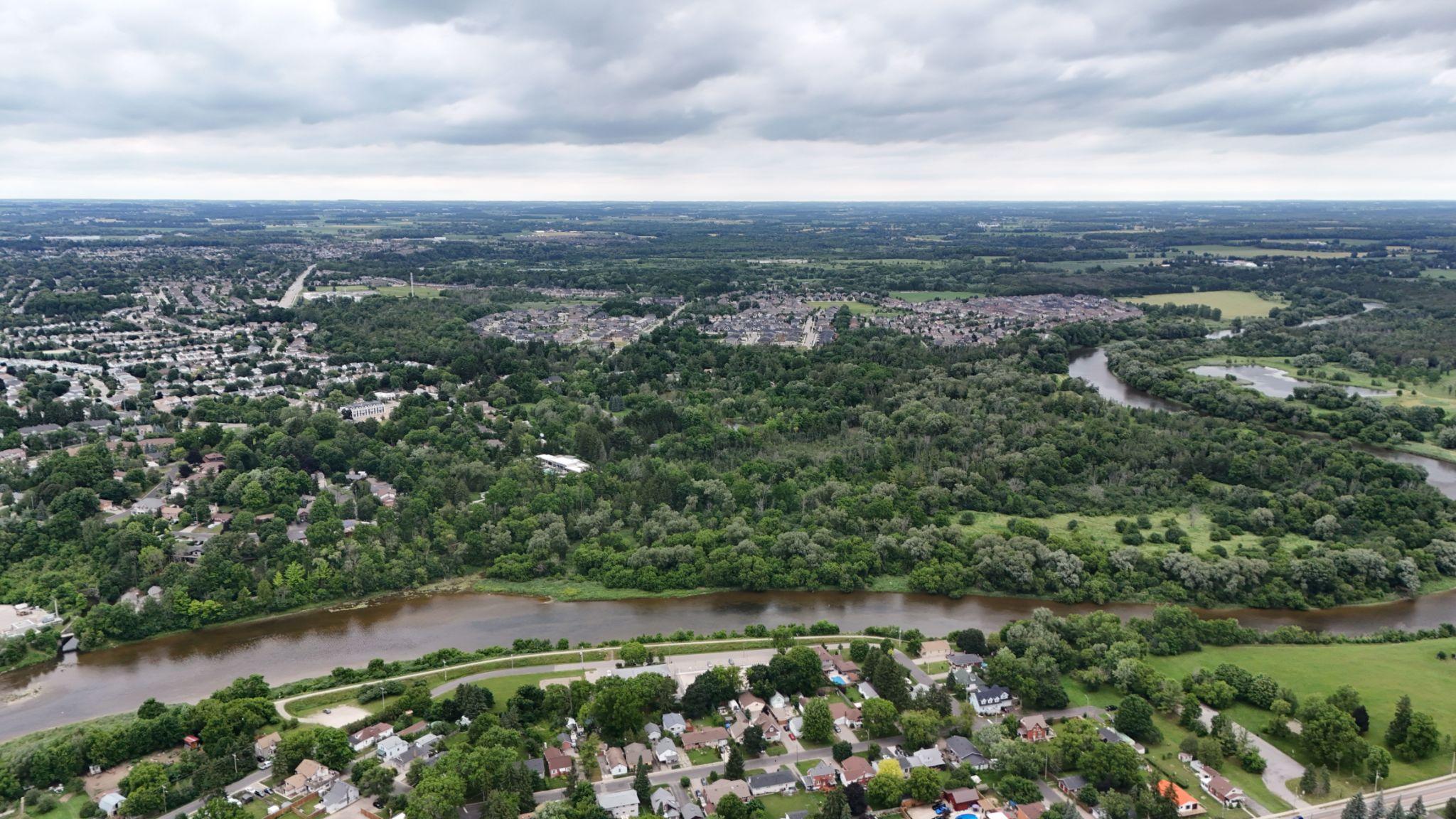
Choosing the right commercial appraiser in Waterloo Region
In a market defined by submarkets and asset nuance, the person doing the analysis matters. Look for a commercial appraiser in Waterloo Region who can speak plainly about the three approaches to value and who brings actual local comparables to the table. Ask how they will handle lease up assumptions, how they derive cap rates, and what their plan is if sales evidence is thin. If they dodge those questions with boilerplate, keep looking.
Turnaround time and cost matter, but so does credibility with lenders and investors. Firms that routinely complete commercial appraisal services in Waterloo Region understand which banks require which scopes, and which details stress underwriters. That familiarity can mean the difference between a quick advance and a memo asking for clarifications that drag the file.
A short story from King Street
A few years back, a client bought a mixed use property on King Street near an ION stop. The ground floor was leased to a local cafe at below market rent, upstairs sat two floors of dated office. The renovation budget was tight. The owner’s plan counted on refinancing based on a post renovation value within eighteen months.
The appraisal did two things that changed the plan. First, we modeled the upstairs with realistic downtime and tenant improvement allowances, pushing stabilized value into year three rather than year two. Second, we adjusted the cap rate upward due to rollover of the cafe lease inside the loan term, since its rent would have to move materially to support the pro forma. The as is value came in lower than hoped, but the report also highlighted that converting the second floor to medical office, given nearby demand, would measurably lift rents and reduce incentives.
The owner pivoted. They targeted medical tenants, offered longer terms with tailored improvements, and accepted the three year stabilization. The refinance a year later used an updated appraisal that reflected signed leases and stronger NOI. Cost and value diverged at the start, then realigned as the income story matured.
Bringing it together
Commercial appraisal work in Waterloo Region lives in the space between spreadsheets and sidewalks. Numbers must be rooted in observed evidence, and assumptions must be tested against how tenants choose locations, how lenders advance funds, and how buyers absorb risk. Cost is not irrelevant, but value is the market’s verdict, not the contractor’s.
If you own, buy, or lend on commercial assets in Kitchener, Waterloo, or Cambridge, insist on analysis that respects the local context and explains the trade offs. That is what separates a report that sits in a file from one that guides decisions. And when your next deal turns on whether price matches value, the right help from a skilled commercial appraiser in Waterloo Region will save you time, capital, and a few grey hairs.