Market Trends Shaping Commercial Property Assessment in Perth County
Perth County’s commercial market looks unassuming at first glance. Fields and farm-gate businesses give way to main streets in Mitchell and Milverton, then to Stratford’s theatres, hotels, and restaurants. Threaded through it all are light industrial parks, agri-food processors, and distribution buildings that move product across Southwestern Ontario. When you work in commercial property assessment here, you learn quickly that value follows utility and cash flow more than postcard charm, and that small shifts in policy or infrastructure ripple wider than they do in big urban centres.
What makes commercial assessment in Perth County distinct is the blend of small-city economics with regional logistics. Stratford and St. Marys pull service jobs and tourism. North Perth, particularly Listowel, has manufacturing scale and retail that punches above its weight. Perth East and West Perth tie value to agricultural supply chains, trucking, and rural services. Each submarket has its own rent patterns, vacancy risk, and buyer pool, which means any credible commercial building appraisal in Perth County must be rooted in local evidence, not generic provincial trends.
What is actually moving prices
Over the last two years, most conversations around value have started with interest rates and ended with tenant risk. The middle chapters include construction costs, zoning certainty, and the availability of clean land on good roads. Put simply, if you give investors a stable tenant, modest capital needs, and yield that clears their financing cost with a cushion, you have a competitive property. If you layer in operational fragility or environmental uncertainty, pricing pulls back fast.
I have seen the same 20,000 square foot industrial building in Listowel underwrite millions apart based on two differences: one had a new 10-year lease to a national distributor at market rent, the other was owner occupied and would be vacant on closing. That is the magnifying effect of perceived cash flow durability in a small market.
Rates, cap rates, and the return of disciplined math
As the Bank of Canada raised its policy rate from 0.25 percent to a restrictive range, buyers in Perth County reattached cap rates to the cost of debt. For stabilized industrial, the forward cap rates that had dipped into the low fives during the easy-money era expanded toward the mid to high sixes, sometimes low sevens, depending on lease quality and building functionality. Retail cap rates split: grocery-anchored or pharmacy-anchored strips held tighter, while pure discretionary retail and older main street storefronts shifted https://sergioxtnq487.fotosdefrases.com/commercial-appraisal-services-perth-county-supporting-financing-and-refinancing wider. Office, especially conventional second-floor space above retail, required the largest risk premiums.
You will not find a single number that fits every address, but the logic holds: if a buyer’s all-in financing sits around 6 to 7.5 percent and they face real operating risk, they demand a return that justifies the work. That has pushed underwriters to test rents more rigorously. Are the $14 net rents in St. Marys sustainable once the inducements burn off, or do they slide to $12 at renewal if the tenant mix weakens? Do industrial rents signed at $9.50 triple net in 2021 refresh at $10.75 to $12.00, or does supply coming online in Kitchener-Waterloo cap growth? The answers hinge on the specific submarket and building utility, not on averages.
Industrial and logistics have the clearest bid
Demand for small to mid-bay industrial space across Perth County has outpaced speculative supply for years. The tenant base is practical: fabricators, agri-food processors, construction trades, e-commerce support, and last-mile distributors who prefer being 30 to 60 minutes from major markets without paying them. Buildings with clear heights of 22 to 28 feet, efficient loading, and sufficient yard are today’s workhorses. Ceiling height below 18 feet, excessive office buildout, or constrained loading cut your rent per square foot and reduce your buyer pool.
Anecdotally, I watched an older 35,000 square foot plant near Mitchell with 16-foot clear, dated electrical, and uneven floors sit for months, no surprise at the original pricing. The seller invested in minimal but surgical upgrades: LED lighting, repaired slab, fresh power panel labeling, and a yard regrade. They landed a three-year lease with options at a moderate rent. The cap rate buyers showed up right after, relieved that the income story was credible. It is not fancy, but it is what the market will pay for right now.
Retail is separating into two distinct lanes
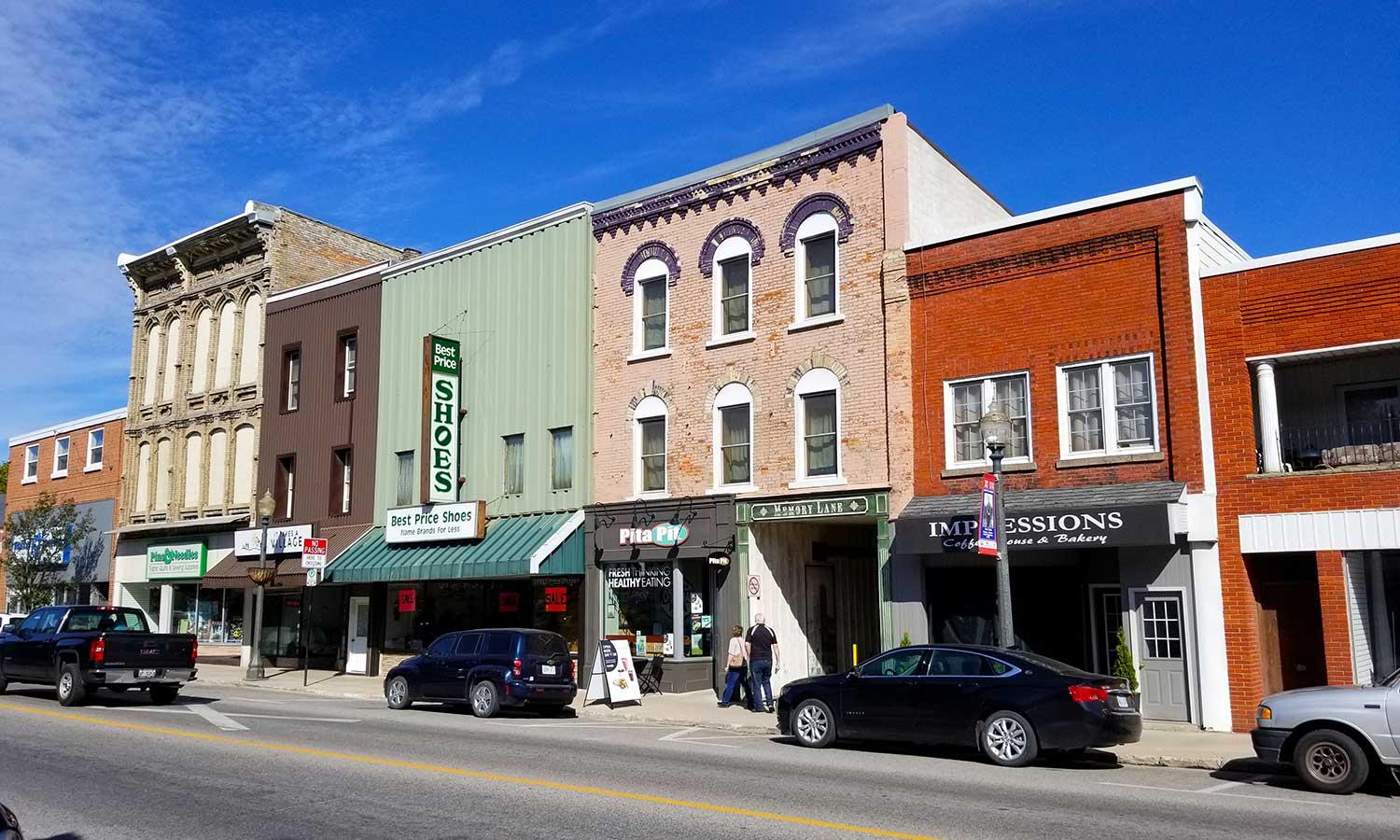
Tourism supports Stratford’s core retail and hospitality, but the market still differentiates sharply between experiential corridors and functional community retail. On main streets in smaller towns, restaurants with good patios, specialty shops, and services connected to local spending can thrive, yet their leases are often shorter and their balance sheets thinner. Strips anchored by daily-needs tenants, or small plazas with strong parking and visibility on corridors like Wallace Avenue in Listowel, command steadier rent rolls and lower vacancy even when consumer belts tighten.
Assessment needs to recognize where the cash flows actually come from. A 1,200 square foot boutique paying $27 gross can sound impressive, until you normalize for net rent and realize the landlord is covering most operating creep. Compare that to a 5,000 square foot pharmacy paying a solid net rent with long term, where operating costs are a pass-through and capital is predictable. The headline rate matters less than the structure under it.
Office is niche, but medical and professional space still clears
Traditional office saw the steepest reset, though not the free fall some feared. In Stratford and St. Marys, small suites for legal, accounting, physiotherapy, and medical services continue to lease because those practices draw from a local catchment and need presence. The key variables today are accessibility, parking, and cost certainty. Second-floor walk-ups with dated HVAC and no elevator lean on below-market rents to retain tenants. Ground floor medical space with modern mechanical systems and accessible washrooms competes effectively even at higher rates, provided the net structure is clear.
For commercial building appraisers in Perth County, that means income approaches must split the office market by use and utility, not bundle it together. It also means higher tenant improvement allowances need to show up in stabilized cash flow assumptions, or you will overstate value.
Land is where deals die or come alive
Commercial land appraisers in Perth County live in the details of frontage, depth, drainage, servicing, and access. A seemingly modest planning or servicing constraint can swing value by six figures on small sites and by multiples on larger parcels.
-
Hydro capacity and water availability: Several parcels marketed as “serviced” are functionally underpowered for modern light industrial uses. Upgrading a transformer or bringing a larger water line across a road is not a minor cost. I have seen pro formas miss by 200,000 dollars on utility upgrades alone.
-
Access and turning movements: On rural arterials, getting a right-in, right-out onto a county road is not the same as securing a full-movement intersection. Truck-friendly access changes the buyer pool from local contractors to regional distributors, and value follows.
-
Stormwater and soils: Clayey soils near floodplains can push stormwater solutions from simple ponds to more complex systems. On small sites, that can cannibalize buildable area to the point of killing the project. Savvy buyers cost this early and bind it into their offers.
-
Policy certainty: Zoning that already supports the intended use commands a premium. If an official plan amendment or rezoning is required, the discount depends on how closely the proposal tracks municipal priorities. In towns emphasizing employment lands protection, non-industrial proposals pay a risk tax.
These are the reasons vacant land values defy easy comparables. Adjustments for time, density, and servicing make or break a supportable conclusion. When you hire commercial appraisal companies in Perth County for land work, pick teams who have wrestled permits and utility drawings, not only spreadsheets.
Construction costs and the stubborn floor under the cost approach
Replacement costs jumped materially during the pandemic era and, while some materials have softened, the installed cost to replicate a functional industrial box or modern medical space remains far above 2019 levels. Even when we rely on the income approach for stabilized assets, the cost approach still matters as a boundary check. If your income conclusion values an older, inefficient building far above what it would cost to construct a more efficient one on a comparable site, you need to challenge your rent and cap assumptions. Conversely, for unique specialty assets with limited comps, the depreciated cost new often anchors the low end of value in today’s conservative lending environment.
In practice, I am seeing new-construction hard costs in the region stay elevated due to labour scarcity and subcontractor lead times. The cost gap has kept older but functional buildings relevant, even prized, because tenants will accept quirks if it keeps rents under double digits on a net basis.
Environmental diligence is not a box to tick
Perth County’s industrial and agri-food history is a strength, but it comes with environmental legacies. Dry cleaners on main streets, former fuel depots near rail corridors, and manufacturing shops that handled solvents leave traces. A clean Phase I ESA from a reputable firm de-risks a deal. Lack of one expands cap rates and haircut offers. Lenders, especially credit unions active in the region, still finance strong cash flows, yet they are unapologetically strict on environmental. For commercial property assessment in Perth County, we impute this into discount rates even before a bank asks.
Floodplain mapping along the Thames and other waterways adds another layer. Properties near flood fringe can still transact, but marketability and insurability factor into value through higher operating costs and potential retrofit demands. Insurers have become meticulous in underwriting sump systems, backflow preventers, and elevation certificates.
Data scarcity, verification, and the craft of local adjustments
In major cities, you can triangulate rent and cap rate ranges with dozens of clean comparables. In Perth County, the data set is thinner and more idiosyncratic. Private deals, vendor take-back financing, and leases embedded in broader business transactions muddle the signal. That makes sales verification more than a courtesy call. You need to separate true income from shadow subsidies, identify one-off inducements, and normalize occupancy costs when gross leases hide variability.
When I build a rent schedule for a mixed-use building on Stratford’s Ontario Street, I will often cross-check with at least three off-corridor deals in St. Marys and Mitchell to see how much of the rent is location premium versus tenant quality. Then I pressure test it against the cost of occupancy for a plausible replacement space. If the tenant is paying far above a workable alternative, the renewal risk needs to show up in the terminal cap rate or in a vacancy and collection adjustment.
The three classic approaches still govern, but with local twists
-
Income approach: For stabilized properties, direct capitalization remains the workhorse. The trick here is careful normalization of net operating income. Factor realistic non-recoverable expenses, management even for owner users, and structural reserves that match the building’s age. For assets with lease rollover risk in the near term, a simple cap rate on last year’s NOI can mislead. In those cases, a discounted cash flow, modest in duration, often captures the interim re-leasing drag and then a stabilized year.
-
Sales comparison: You will rarely find a perfect comp in the same town, same size, same year. Adjustments for size are especially important in small markets, because buyer pools widen significantly as you cross thresholds. A 7,500 square foot contractor bay competes with owner users, while a 40,000 square foot plant chases institutional or regional private buyers. That alone can move price per square foot by 10 to 25 percent.
-
Cost approach: Useful for newer construction where depreciation is limited, or for special-use assets like ice plants, seed cleaning facilities, or veterinary clinics where the market for second-hand improvements is thin. Obsolescence should be argued with evidence: ceiling height, column spacing, truck access, and code-compliance costs.
A solid commercial building appraisal in Perth County explicitly documents the trade-offs between these approaches, not just the math. A well-defended reconciliation section is where credibility lives.
How municipal direction and provincial policy filter into value
Zoning by-laws and community improvement plans matter more in smaller markets because one approval can swing the entire rent roll potential. Stratford’s continued push for creative industries and light tech brings spillover demand for clean, modern flex spaces. St. Marys and Listowel’s focus on employment lands preserves industrial value by limiting conversion pressures. Provincial moves to accelerate housing can tighten industrial land supply if municipalities guard employment areas, and can also lift nearby retail demand as rooftops arrive.
Assessment professionals watch servicing expansions closely. When a new trunk line or road improvement is funded, it changes the development viability map. Properties just outside current servicing boundaries trade at a discount that can unwind when shovels hit the ground. I have watched land values step up in phases as buyers gain confidence in timelines, not in response to a memo, but to a contractor’s mobilization.
Owner occupied assets deserve investor-grade thinking
Owner users often ask why their building does not appraise at the sum of the mortgage and what they have “into it.” The market buys income and utility, not sentiment. When we convert an owner-occupied property into an investor lens, we insert a hypothetical lease at market terms. The market rent, not the owner’s internal calculus, drives value. If the layout is bespoke or the improvements are too specialized, the market rent may be lower than the owner hopes. Conversely, clean, flexible space with good power and loading can surprise owners on the upside.
I have seen a St. Marys fabricator refinance successfully once they documented market-level rent through a sale-leaseback at an arm’s length price. They gave the buyer a 7-year term with fixed escalations and options. The cap rate embedded in that deal reflected both tenant strength and building functionality. It is a reminder that even in small markets, professional structuring commands better pricing.
A short, practical checklist for owners preparing for appraisal
- Gather the trailing three years of operating statements, breaking out recoverable and non-recoverable expenses.
- Provide copies of all current leases, amendments, rent rolls, and a note on arrears or deferrals.
- Share any environmental, building condition, or roofing reports completed in the last five years.
- Map out capital expenditures since purchase and those planned over the next 24 months.
- If you are an owner user, prepare a realistic market rent estimate with evidence, not wishful thinking.
How buyers are underwriting risk in 2026
Buyers in Perth County are modeling more conservative exit cap rates and inserting longer downtime for tenant rollover, especially for main street retail and conventional office. They are also pushing sellers to share more documentation. A building condition assessment that used to be a nice-to-have is now a standard deliverable in larger transactions. That means sellers who invest in crisp documentation and tackle easy maintenance items ahead of listing often earn back the spend in reduced pricing friction.
Financing is available, primarily from credit unions and regional lenders that know the area. They lean heavily on debt service coverage rather than aggressive loan-to-value, which ties back to the need for clean, defensible NOI. Vendor take-back mortgages appear periodically, especially on properties with thinner buyer pools. If you see pricing that seems out of step with the broader cap rate trend, check for a VTB that sweetened the buyer’s yield.
Where this could go over the next 12 to 24 months
Several forces will shape assessments through the next cycle:
-
If interest rates ease modestly, expect cap rates to compress slightly for the best industrial and essential retail, while secondary assets may only stabilize rather than re-rate quickly. Liquidity flows first to the cleanest stories.
-
Industrial rents likely see measured growth where supply remains constrained, particularly for 10,000 to 30,000 square foot bays with competent loading and clear heights north of 20 feet. Older stock will need price discipline or targeted upgrades to compete.
-
Main street retail should benefit from tourism recovery and pent-up service demand, though tenants will remain sensitive to total occupancy cost. Landlords who right-size net rents and manage operating costs transparently will keep better tenants.
-
Land values will track servicing certainty and utility capacity. Parcels with issues that can be quantified and solved will trade. Sites with unknowns will languish or clear at deeper discounts.
-
Construction costs will not return to pre-2019 levels in the near term. The replacement floor under older, functional buildings will hold, which supports stable valuations for adaptable assets.
Edge cases and why they matter
Not every appraisal hangs on a market rent and a cap rate. Some assets demand bespoke handling:
A seed cleaning plant near Mitchell with specialized equipment integrated into the structure behaves more like part real estate, part going concern. The real estate component must be separated carefully from equipment value and business goodwill. Lenders expect that split to be logical and supported by market observations, not by allocating whatever number fits their covenants.
A heritage building near Stratford’s core carries both cachet and constraint. Heritage designation can cap exterior alterations, slow approvals, and raise restoration costs. Buyers with a long hold horizon may absorb it for the location premium and unique tenant appeal. Shorter-term investors often step back once true capital needs are disclosed. For assessment, that typically means higher reserve allowances and a slightly higher cap rate than a non-heritage peer with similar rent.
A rural commercial yard used by a civil contractor may have limited alternative uses if adjacent residences or environmental buffers constrain operations. The valuation should recognize that the pool of buyers is narrow, which often translates into lower price per acre than an apparently similar site with broader permissions.
Choosing the right expertise
If you are commissioning a commercial building appraisal in Perth County, ask about specific experience in Stratford, St. Marys, Listowel, and the rural townships. The same applies when hiring commercial land appraisers in Perth County, where local servicing knowledge can save months of guesswork. There are capable commercial appraisal companies in Perth County and the surrounding region. The differentiators are simple: do they verify sales rather than scrape them, can they articulate cap rate logic that matches current financing conditions, and will they tell you when the evidence points away from the number you hope to see?
For property owners, aligning expectations with the market’s present mood is not defeatist. It is strategic. Appraisals are snapshots in time. The play is to improve the next snapshot, whether through lease restructuring, modest capital upgrades with measurable payback, or by de-risking land through planning steps you control.
Final thoughts from the field
The Perth County market rewards functional space, realistic underwriting, and good documentation. It penalizes ambiguity. Values today lean more on demonstrated cash flow than on speculative stories, and that suits a region built on steady work and tangible output. Whether you are bringing a property to market, refinancing, or planning a redevelopment, frame decisions through that lens. For commercial property assessment in Perth County, the strongest reports are not the glossiest. They are the ones that name both the strengths and the soft spots, tie each to evidence, and present a valuation that a tough buyer, a cautious lender, and a seasoned owner can all recognize as fair.