Post-COVID Market Recovery and Commercial Property Appraisal Brant County
The ground shifted under commercial real estate during COVID, and in places like Brant County the ripples are still moving. Shops came back, but some never reopened. Tenants discovered they could run leaner footprints. Industrial users learned how fragile supply chains can be, then doubled down on local inventory and flexible logistics. Appraisers had to adapt, fast. We now read leases differently, test cap rates against a noisier backdrop, and account for risk that used to be footnotes. If you need commercial property appraisal in Brant County today, you are not just asking what a building is worth. You are asking how durable the income is, what happens to financing costs over a lease cycle, and how much of the COVID-era volatility has settled into the new normal.

I work where numbers meet ground truth. This piece is a distillation of what has changed, what has not, and how to approach valuation decisions in Brant County right now.
The map of Brant County changed, then settled
Before 2020, Brant County was already feeling spillover from the GTA and Hamilton markets. Industrial land near highways 403 and 24 drew users priced out of larger centres. Downtown Brantford evolved building by building, with post-secondary expansion and steady infill. Then everything stopped, then sped up.
- Industrial accelerated. By late 2021, vacancy in small and mid-bay space tightened to low single digits, and lease rates for functional 10,000 to 50,000 square foot boxes rose quickly, in some cases 20 to 40 percent over pre-2020 levels. Even older stock with 16 to 20 foot clear height found tenants faster than expected.
- Office splintered. Small professional offices persisted, especially where client-facing service matters. Larger footprints carrying pre-pandemic rents saw backfilling challenges, more sublease offerings, and shorter terms.
- Retail bifurcated. Service retail, medical, QSR with drive-thru, and grocery-anchored plazas held firm or improved. In-line soft goods struggled if parking was weak or if landlords could not reconfigure units quickly.
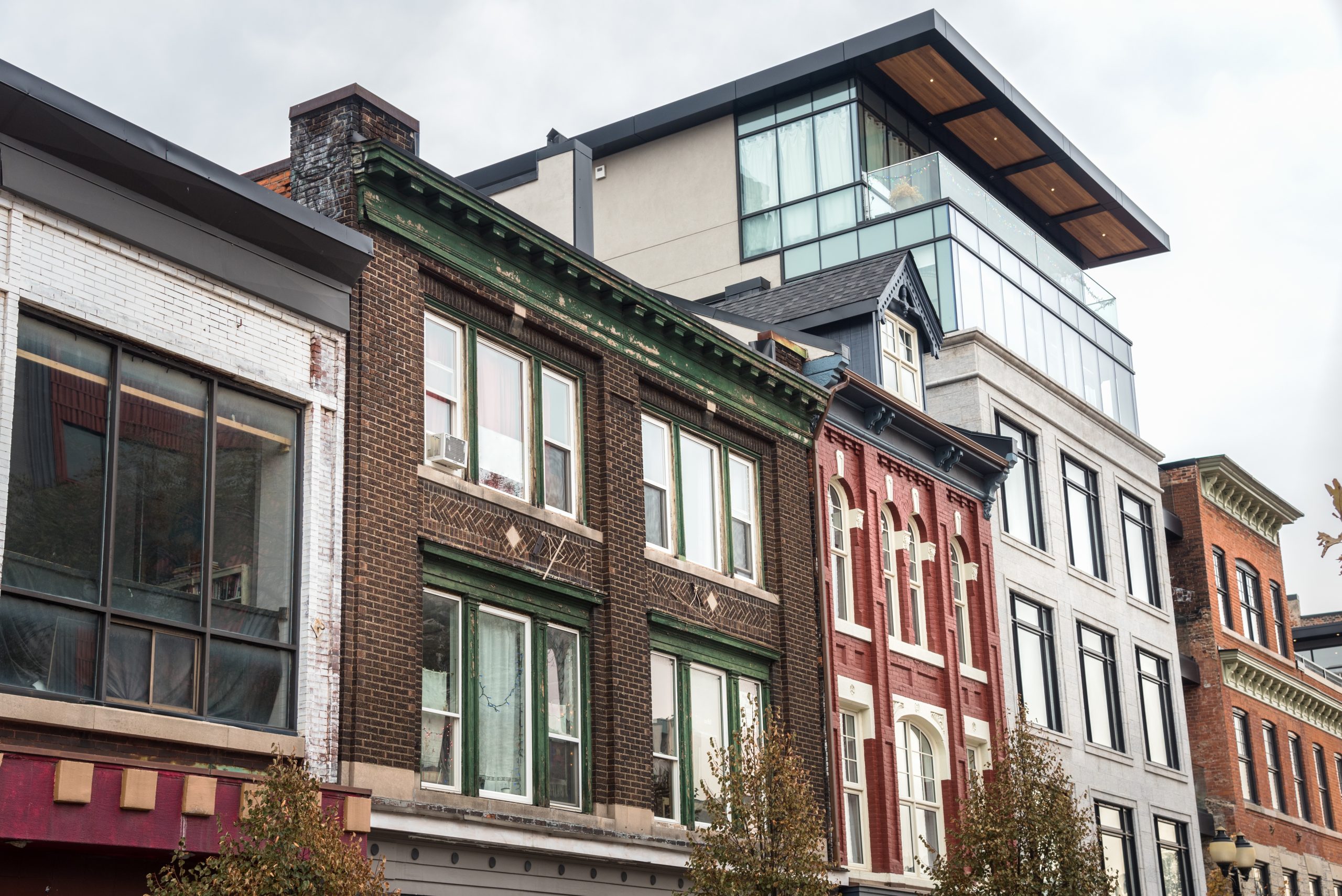
- Mixed-use downtown stock, the classic two-storey brick with ground-floor retail and upstairs apartments, turned into a quiet winner. Residential demand buoyed values and reduced overall volatility, even when a ground-floor tenant turned over.
By 2023, demand cooled as interest rates rose. The heat came off industrial land, and cap rates widened across the board. But the core story remained. Functional industrial and mixed-use with resilient tenancy kept pricing power. Commodity office lagged. Neighborhood retail sorted into haves and have-nots based on parking, access, and tenant lineup.
Rates, inflation, and the way cap rates actually moved
Rates changed the math. Appraisers cannot pretend otherwise. A buyer who underwrote a 5 percent debt cost in 2019 faced 6 to 8 percent by mid-2023, sometimes higher for small-balance or marginal assets. When debt costs rise faster than net operating income, equity returns compress unless cap rates adjust.
Did cap rates expand one-for-one with interest rates? Not quite. Industrial and grocery-anchored retail saw less movement because buyers still expected rent growth, and because replacement costs jumped. Investors paid a premium for certainty and functionality. On the other side, second-tier office saw sharper cap rate expansion, sometimes 150 to 250 basis points over pre-2020 norms.
In Brant County, I generally observed these post-2020 ranges for stabilized assets with competent management and typical risk profiles:
- Small-bay industrial: cap rates in the mid-5s to mid-6s at the 2022 peak, widening to the mid-6s to low-7s by late 2023 and into 2024.
- Grocery or medical-anchored neighborhood retail: mid-5s to mid-6s at peak, now mostly high-5s to mid-6s depending on lease rollover and anchor covenant.
- Unanchored strip retail: typically high-6s to high-7s unless tenancy is unusually strong.
- Downtown mixed-use: effective blended cap rates often in the high-5s to low-7s, with residential income stabilizing valuation but ground-floor tenant quality deciding the top or bottom of the range.
- Suburban office with commodity finishes: high-7s to low-9s, sometimes higher if significant vacancy looms or capital work is deferred.
These are directional, not promises. The outliers matter. I have seen tidy, owner-occupied industrial condos with excellent parking trade at what looks like an implausibly low cap rate. Peel back the layers and you will find implicit assumptions about user premiums, tax efficiency, and control that do not translate to pure investment deals.
Construction costs and insurance became valuation inputs, not afterthoughts
Replacement cost used to be the quiet check at the back of the report. Since 2021, it stepped to the front. Construction costs jumped 20 to 40 percent in many segments, and while material prices cooled, skilled labour did not. Insurance followed the same path. Premiums rose, deductibles grew, and some carriers pulled back from older stock with mixed wiring or limited fire separation.
In the cost approach, this means higher replacement cost new and higher external obsolescence deductions where rent growth cannot justify that cost. In the income approach, it means net operating income is not as “net” as it used to be. Operating expenses rose faster than rent in several categories, particularly for small landlords who could not leverage bulk purchasing for waste, snow, landscaping, and insurance. A commercial real estate appraisal in Brant County that simply uses pre-2020 expense ratios risks overstating value.
Leases, churn, and what “stabilized” means now
Before COVID, a five-year lease with two options felt safe. Now, I read those documents with a different lens:
- Are options at market or fixed bumps? If fixed, do they keep pace with inflation, or do they quietly erode income in real terms?
- How is HVAC responsibility worded? A single paragraph can swing thousands of dollars in year-one capital exposure.
- Is there a pandemic or force majeure clause affecting rent abatement or termination? Many leases signed after 2020 contain language that changes cashflow risk in stress events.
- What is the true rollover schedule? Several portfolios carry a “2025 cliff” as leases signed in the reopen rush come due amid higher interest costs.
Stabilization still means predictable vacancy and expenses, but the variance bands widened. When I model stabilized NOI for a commercial property appraisal in Brant County today, I can justify a narrower vacancy allowance for industrial with durable users, but a higher short-term rollover risk in unanchored retail. Judgment matters. A building beside a new medical clinic behaves differently than one beside a struggling big box that has been subletting space for two years.
Sales comparison got noisier, so we triangulate
The sales market has fewer pure comps than it did in 2018. Financing terms vary widely by borrower strength and asset type. User-buyers and investors cross paths more often in small industrial and mixed-use. Vendor take-back mortgages appear in places they rarely did before. If you hand me three sales and ask for a neat bracket, I will likely ask for eight and then discard three.
For commercial appraisal services in Brant County, the daily craft now looks like this:
- Confirm which sales were user acquisitions versus investment trades. A user-driven price often embeds a control premium and does not reflect stabilized investor yield.
- Adjust for atypical terms. A sale with a large VTB at below-market interest is not equivalent to an all-cash closing.
- Trace tenant covenants. A national credit with ten years left commands a different multiple than a local start-up on a two-year deal, even if the rent per square foot matches.
- Cross-check the income approach more rigorously. In 2020 we could sometimes lean on sales when they were plentiful and consistent. Today, the income approach is often the anchor.
A few ground-level examples
Numbers are easier when anchored to real scenes. While confidentiality binds specifics, the patterns are instructive.

Industrial condo, east of Highway 24: A 6,000 square foot unit in a 1990s complex sold near the top of the market. The buyer was an owner-occupier consolidating two leases. The price per square foot looked 10 to 15 percent above investment trades in the same complex a year earlier. Once we underwrote it as an income property with market rents and typical vacancy, the implied yield softened to the mid-5s, which made sense for an owner who valued operational control and frictionless expansion.
Downtown mixed-use, three commercial units with six apartments above: Residential suites had been upgraded in phases, with one still needing work. Commercial tenants were a salon, a small legal office, and a café that pivoted successfully to takeout in 2021. The sale in late 2023 penciled to an overall cap rate in the low-6s on stabilized income, but the first-year yield was closer to high-5s due to a planned suite renovation. The buyer accepted the near-term capex in exchange for durable residential cashflow and downtown foot traffic that proved more resilient than feared.
Neighbourhood retail https://blogfreely.net/kordanpztb/commercial-property-appraisal-brant-county-for-financing-and-refinancing near a medical hub: A 1990s strip with a family physician, physiotherapy, and pharmacy, plus two in-line food tenants. Even as rates climbed, cap rates stayed sticky in the mid-5s to high-5s because the tenant mix drives daily necessity traffic. That is precisely where external risk matters: a new urgent care facility less than a kilometre away added demand instead of diverting it, and parking circulation was strong. When location fundamentals align, cap rates can resist macro pressure longer than a spreadsheet suggests.
Commodity suburban office: A two-storey with small professional tenants and dated common areas. Vacancy sat at 20 percent, with several renewals due in the next twelve months. The underwriting required higher leasing costs, longer downtime, and free rent assumptions. The result was a cap rate in the 8s to 9s that looked harsh until you ran it beside real cash needs over the next leasing cycle. Buyers understood the gap and bid accordingly.
The appraiser’s toolkit, adjusted for 2024 and beyond
The methods did not change. The weight on each did.
Income approach: More critical than ever for income-producing assets. I segment tenants by covenant, size, and use, then assign renewal probabilities. Market rent is not a single point but a band. For a commercial real estate appraisal in Brant County, I also test two or three cap rate scenarios anchored to local sales, regional spreads, and debt markets. If a building is rolling heavy in the next 24 months, a single terminal cap rate rarely captures enough risk, so I may model a blended yield or an explicit turnover event with downtime.
Sales comparison: Still essential for owner-occupied or transitional assets. I look closely at seller motivations, closing adjustments, and any atypical inducements. For industrial condominiums and small-bay freeholds, I separate the user premium explicitly by pairing sales with and without in-place rents.
Cost approach: Re-emerged, especially for special-use assets or newer construction where replacement cost is transparent. I am cautious with entrepreneurial profit in times of rising costs and permitting delays. On older stock, I calibrate external obsolescence rather than ignore it, using a reconciliation to the income approach instead of forcing an answer the market would not pay.
Lenders, investors, and municipalities are asking sharper questions
Lenders want to know how sensitive value is to cap rate and rent assumptions. They also want to see clear evidence that market rent covers escalated expenses, including insurance. For smaller loans, some lenders moved from desktop or drive-by checks back to full narrative reports. That is smart in a noisy market.
Investors are focusing on lease structure more than headline rent. Net versus semi-gross matters, but I look beyond the label. A supposed triple-net lease with landlord-supplied HVAC or a roof replacement clause behaves more like a modified gross deal in cashflow terms.
Municipal activity, including infrastructure improvements and planning changes, can swing values. A road widening that affects curb cuts at a retail plaza, or a planned transit improvement linking into Brantford’s downtown, shifts exposure. Appraisers cannot rely only on dated official plan maps. We need the latest engineering drawings and staff commentary, even if the change is three years out.
Ordering with intent: what to prepare before you call
An appraisal is faster, more precise, and less expensive to interpret when the brief is clear. If you are ordering from commercial property appraisers in Brant County, assemble a tight package:
- Current rent roll with lease start and end dates, options, base rent, additional rent structure, and any pandemic-era amendments.
- Copies of all leases and major correspondence about renewals, abatements, or terminations, plus a summary of inducements paid or promised.
- Trailing 24 months of operating statements, broken out by category, along with current year budgets and any known step changes such as insurance increases.
- A list of recent capital expenditures and upcoming needs, with quotes where available for roofs, HVAC, paving, or code upgrades.
- Any environmental or building condition reports, site plans, surveys, and as-built drawings.
With that file, a commercial appraiser in Brant County can cut through assumptions and get to the value drivers that matter for your decision, whether refinancing, estate planning, a partner buyout, or pre-listing.
Timing, scope, and report types
Turnaround depends on access, document completeness, and complexity. For a stabilized, small retail strip or industrial condo with full documents, a narrative report can often be delivered in 10 to 15 business days. Complex mixed-use with renovations underway, partial vacancies, or unresolved environmental questions can take longer.
Scope matters as much as timing:
- Desktop updates have a place for internal decisioning when the property and tenancies are unchanged and the prior inspection is recent. In a shifting market, lenders often prefer at least a drive-by or interior check.
- Restricted-use formats answer narrow questions, like allocating value between land and improvements for tax or accounting. They are not a shortcut for financing decisions.
- Full narrative reports are the right fit when debt, partnership changes, or litigation are on the table. They stand up to scrutiny because they make the reasoning explicit.
If you are unsure, ask for a short scoping call. A good appraiser will tailor the work so you do not pay for analysis you do not need, and you do not skimp on what you do.
Common pitfalls and how professionals adjust
The post-COVID cycle exposed habits that no longer hold.
Treating pre-2020 expense ratios as evergreen: Operating costs grew unevenly. If you still plug in a 25 percent expense load for a small retail plaza without testing insurance and utilities separately, you risk a surprise. I now normalize expenses line by line, then test them against both the subject’s history and matched locals.
Underestimating rollover risk: A single anchor tenant rolling in 18 months is a bigger deal at a 7 percent debt cost than it was at 3.5 percent. I model explicit downtime and leasing costs based on actual broker quotes rather than generic estimates.
Forgetting small physical constraints: Turning radii, truck court depth, and insufficient power kill otherwise solid industrial comps. In Brant County, older stock often has 200 to 400 amps of power that will not support certain light manufacturing uses without costly upgrades. Functional obsolescence is not an academic term. It changes rent and absorption.
Misreading user-buyer premiums: A manufacturer buying their own building pays for control, smoother operations, and sometimes the psychological boost of ownership. Investors cannot bank that premium without evidence of lease-up at those implied rents. In reconciliation, I separate user trades from investor yields rather than averaging them into a muddle.
Where we go from here
Recovery is not a single line. Industrial has likely settled into a more balanced mode, with modest rent growth and stronger tenant due diligence. Retail will remain a story of curation, with medical and daily needs leading. Office will continue to differentiate between collaborative, client-facing nodes and everything else.
Brant County’s fundamentals are sound. Proximity to major markets, improving infrastructure, and relative affordability compared to Hamilton, Waterloo, and the west GTA provide a tailwind. The headwinds - higher financing costs, persistent construction inflation, and tighter underwriting - will keep marginal assets in check.
Investors who underwrite honestly and maintain properties will find buyers and lenders. Owners who price to the last peak without accounting for capital needs will sit.
Signals to watch over the next 12 to 24 months
- Direction of policy rates and how quickly lenders pass through reductions to small commercial borrowers compared to large institutional deals.
- Insurance market stability, especially for older mixed-use with wood-frame upper levels and limited fire separation.
- Industrial vacancy trends along the 403 corridor and whether speculative builds restart at today’s cost base.
- Retail tenant churn in non-anchored strips, with attention to local service providers and whether they can shoulder higher occupancy costs.
- Municipal planning moves that add or restrict density in downtown Brantford and along key arterials.
These are not abstract. A 50 basis point drop in borrowing cost, paired with stable insurance premiums, can move a cap rate half a notch in competitive bidding. A modest rise in industrial vacancy can shift negotiating power on renewals. Translation: the edges matter, and they show up first in the data points above.
Choosing the right partner
Not all commercial appraisal services in Brant County are the same. Depth with local brokers, property managers, and municipal staff matters. So does a willingness to say “we do not know yet” when data are thin, then build a case with sensitivity analysis instead of false precision.
When you engage commercial property appraisers in Brant County, ask about their post-2020 track record across asset classes, how they handle user-buyer transactions in reconciliation, and whether they will walk you through the risk levers in plain language. A solid narrative report should show the work, test reasonable ranges, and explain why the final value sits where it does within those bands.
A final practical note
Markets keep moving. Good appraisal practice blends discipline with humility. The discipline is in the data, the lease reading, and the math that connects income to yield. The humility is recognizing the last comp does not define the next deal when financing costs, construction inputs, and tenant behaviour are all shifting.
If you treat valuation as a living process, your decisions will age well. If you want a number and nothing more, you will get a number, but not necessarily wisdom. A thoughtful commercial property appraisal in Brant County offers both.