Why Local Expertise Matters in Commercial Real Estate Appraisal in Wellington County
Accuracy in commercial valuation is not a matter of decimal points. It is the difference between a deal that closes and one that stalls for months, between financing that clears at favorable terms and a loan committee that asks for a second opinion. In Wellington County, those stakes climb because the market is not a single market at all. It is a collection of Main Streets, industrial parks, agri-business corridors, and tourism hot spots that move at different speeds and respond to different pressures. An appraiser who cannot read those gears will miss where value sits today and where it is likely to go next.
Commercial property owners, lenders, and tenants feel this in practical ways. A retail plaza in Fergus can trade at a different cap rate from a similar plaza in Mount Forest even if rents look alike on paper. A contractor yard with outdoor storage in Puslinch can draw three types of bidders, each with its own risk tolerance and yield expectation. The same gross building area can carry very different values if zoning, servicing, and market depth are not weighed with local nuance. This is why local expertise is not a nice-to-have in commercial real estate appraisal in Wellington County, it is the spine of credible work.
What counts as local expertise
Local expertise is not memorizing a map of townships. It is lived familiarity with how decision makers behave and how assets perform block by block. A commercial appraiser in Wellington County does not simply pull comparables from a provincial database. They know, from repeated transactions and site visits, how lease-up risk differs between Arthur and Erin, or how tourist footfall in Elora translates into shoulder-season sales for ground-floor retailers.
There are structural differences in this geography. The County includes Centre Wellington, Erin, Guelph/Eramosa, Mapleton, Minto, Puslinch, and Wellington North. The City of Guelph, while adjacent and economically intertwined, is a separate municipality. Capital flows freely across those lines, but planning frameworks and tax rates do not. The right commercial appraiser in Wellington County navigates both worlds, pulling in the weight of Guelph’s demand where relevant while keeping the analysis grounded in County-specific policy and data.
Beyond municipal boundaries, water and wastewater capacity, road access, and conservation authority overlays all push and pull on value. Parts of the County sit within the Grand River Conservation Authority, with other areas influenced by Saugeen Valley and Maitland Valley. Those designations can limit site alteration or expand setback requirements, which change the feasible building envelope and, in turn, highest and best use. A report that recognizes these constraints, and quantifies how they affect utility and buyer pools, reads differently to a lender than one that repeats a zoning label without context.
Micro-markets within Wellington County
Centre Wellington is not a single market. Fergus and Elora may be ten minutes apart, yet they pull from different buyer and tenant bases. Elora’s historic core attracts destination retail and food service, where seasonal visitor peaks can be double the off-season traffic. That volatility is not a red flag, it is a feature that drives rent premiums on pedestrian blocks and supports experiential operators. An appraiser with local knowledge will adjust stabilized income to reflect seasonal variance rather than average it into blandness.
Fergus leans more toward service retail and professional offices within neighbourhood plazas, with a steady residential base and quick connections to Highway 6 and Guelph. Cap rates for well-leased, grocery-anchored plazas in Fergus may cluster in the high 5s to mid 6s, depending on lease term and covenant. Unanchored strips with local service tenants often trade looser, sometimes into the high 6s or low 7s, particularly if rollover is concentrated in the near term.
Move north and the calculus changes. In Mount Forest and Palmerston, smaller tenant pools and larger catchment areas often mean longer lease-up periods and, in some cases, higher incentives to attract national credit. Industrial land values tend to sit below southern County levels, yet well-positioned contractor yards or agricultural support facilities can punch above their weight because replacement options are scarce. The income approach must incorporate realistic downtime and concessions, otherwise the indicated value implies a market that does not exist.
Eastern townships such as Erin and Guelph/Eramosa feel the gravitational pull of the GTA and Guelph. Properties with highway exposure or flexible industrial zoning see healthy demand from trades, logistics lite, and e-commerce support uses. These users place high value on laydown areas, ceiling height, and truck maneuverability. A typical mistake for a non-local appraiser is to benchmark rents solely on enclosed building area and miss the premium that functional yard space can command in Puslinch or along the 401-adjacent corridors.
Zoning, servicing, and the hidden value levers
Zoning language can look uniform province-wide, but how it is administered locally matters. Commercial real estate appraisal in Wellington County has to engage with the specific by-laws of each lower-tier municipality. Site plan control thresholds, parking ratios, and permitted outdoor storage vary in ways that can make or break a redevelopment play. A site that appears underbuilt at first glance may be hemmed in by road widenings or flood fringe mapping that narrow the net rentable gain.
Servicing is another lever. Several employment areas are on municipal water and sewer, yet pockets remain on private wells and septic. For small-bay industrial, this can be fine. For food processing or medical use, it can be a hard stop. If an appraiser assumes the highest and best use is a medical office because the building’s layout suits it, but the site cannot handle the effluent or parking intensity, the conclusion overstates the market potential. A seasoned commercial appraiser in Wellington County confirms servicing and, when necessary, consults with local engineers to align absorption fields or capacity constraints with feasible tenancy.
Transportation access deserves more than a line about proximity. A unit that is technically close to Highway 6 but requires two tight turns through residential streets is not comparable to a site with direct truck routes. In Minto and Mapleton, proximity to regional highways shapes the tenant mix and the achievable freight patterns. For rural retail tied to agri-tourism, visibility and on-site circulation can mean the difference between 100 cars on a Saturday and a parking lot that sits half-full during peak season.
Data reality: filling the gaps
Large national databases thin out as you move away from the big metros. In parts of Wellington County, sales and lease data are sparser and can be distorted by related-party transfers or partial interests. That does not mean analysis stops. It means the commercial appraiser must triangulate.
MPAC data, local broker records, municipal planning files, and conversations with property managers form a mosaic that can be more informative than a single glossy dataset. Landlord disclosures, if approached professionally, often yield the lease clauses that matter: who pays snow removal, whether the tenant can sublet yard space, how the HVAC replacement reserve is structured. These details move net operating income by thousands of dollars annually, which capitalized at 6.5 or 7 percent is real money.
Competitive set mapping replaces blind comparable selection. If a subject is a 10,000 square foot light industrial building in Puslinch with fenced yard and 18-foot clear height, the true comps are not generic flex condos in suburban Guelph. They are the other yard-heavy sites in Puslinch and Guelph/Eramosa, plus select assets in Milton or Cambridge if the tenant base demonstrably overlaps. Local expertise is the judgment to draw those circles correctly and explain them in the report.
Income approach with rural nuance
Income work in Wellington County frequently involves a hybrid of national tenants and local operators. Many local businesses are family-owned with five to ten locations, strong cash flow, and long histories, yet no public credit rating. With these tenants, lease security reads differently. Renewal probability can be high, but assignment rights, personal guarantees, and deposits carry more weight than in a mall leased entirely to national brands. A careful commercial real estate appraisal in Wellington County will weigh this blended credit picture when selecting a cap rate.
Seasonality also plays a role. In Elora, operators that rely on festival and summer trade may negotiate percentage rent or seasonal occupancy adjustments. In Mount Forest, repair and trades tenants anchor demand year-round. Appraisers who flatten these dynamics into a neat average miss the resilience embedded in certain tenant mixes and the exposure embedded in others.
Operating expenses warrant line-by-line scrutiny. Snow and ice control in the northern parts of the County may exceed costs in southern townships by meaningful amounts over a multi-year average. Rural properties can incur higher waste removal and private road maintenance costs. If the landlord is responsible for yard dust suppression or gravel top-ups, that must sit somewhere in stabilized expenses. An appraiser who simply pastes a generic 35 percent expense ratio onto gross income is not providing commercial appraisal services Wellington County lenders and investors can trust.
Sales comparison without shortcuts
Sales comps must be interrogated. Was the buyer an owner-occupier who paid a premium to control their premises, or an investor underwriting on a 10-year hold with conservative growth? Did the sale include equipment, inventory, or business value rolled into the price that was not stripped out? In rural commercial and light industrial, these wrinkles appear often.
For land, time adjustments matter. Over the past several years, industrial land values across much of Southern Ontario rose sharply, then cooled as financing costs increased. In Wellington County, the pattern showed variation by submarket and by the presence of services. A two-acre serviced industrial parcel in Fergus did not move in lockstep with a similar parcel in Palmerston that awaited sewer expansion. A local appraiser will document the sequencing of municipal servicing plans, which feeds directly into time adjustments and the discount for near-term development hurdles.
Cost approach for special-use assets
Not every property lends itself to a clean income or sales approach. Agricultural support facilities, aggregate-related yards, and specialized repair depots require a cost lens. Replacement cost new, less depreciation, must be anchored by local construction economics. It is not enough to pull a provincial average. A building contractor in Wellington North will quote differently from one in Puslinch, and the availability of trades, winter conditions, and site prep complexity all adjust the effective cost curve.
Functional obsolescence bites harder in rural settings if an odd layout limits future utility. A deep, narrow building with limited turning radii may work for the current operator but constrain the next. Conversely, covered storage and oversized power service can add value that exceeds the simple square foot contribution. An appraiser with Wellington County experience will test these factors with local builders and electricians. That consultation can mean the difference between a credible cost analysis and one that an underwriter disregards.
Case notes from the field
Several recent assignments illustrate how local nuance changes outcomes.
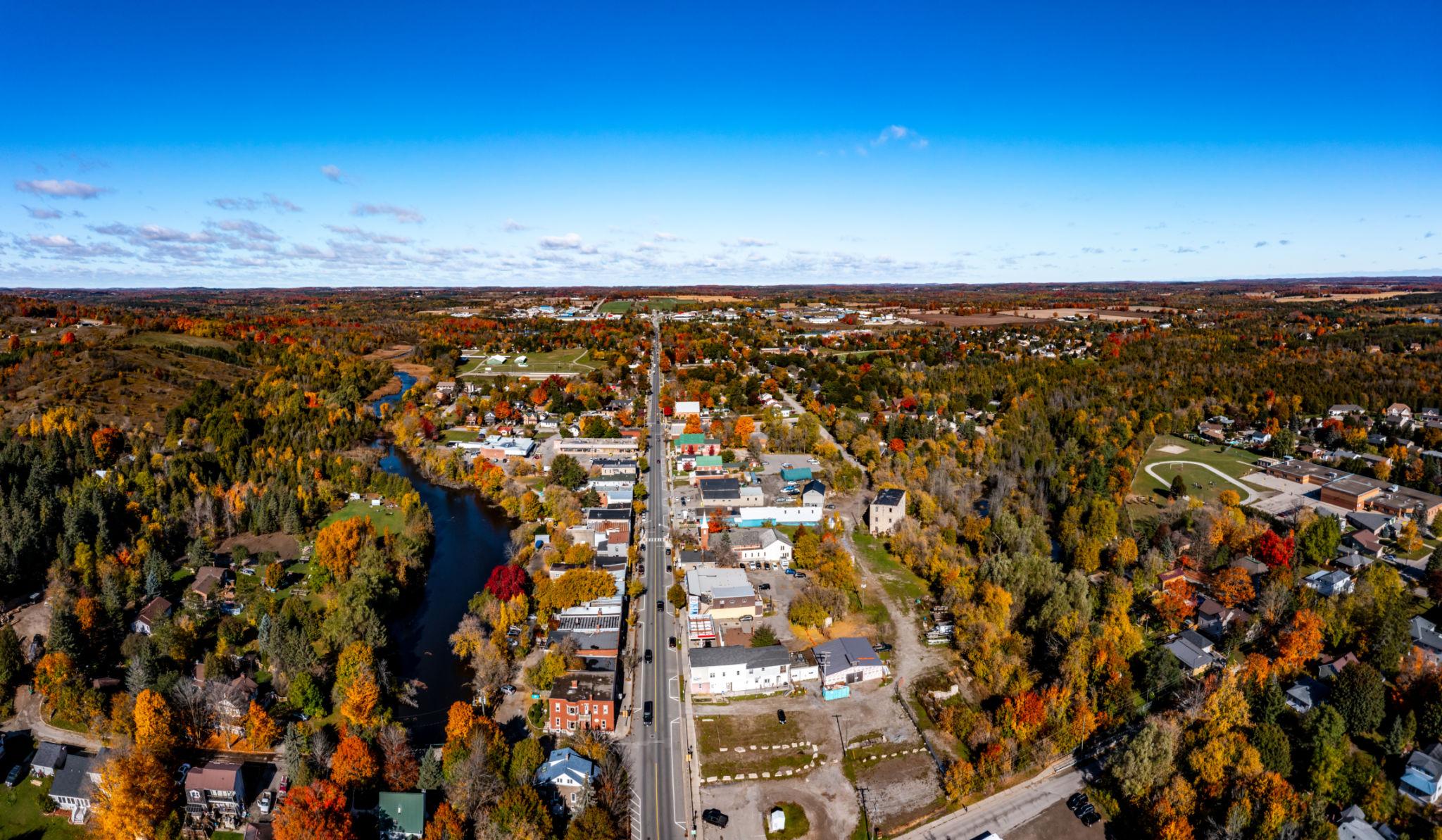
A small mixed-use building on a primary street in Elora carried two retail units at grade and two apartments above. The retail tenants paid above-market rents during peak season but negotiated off-season reductions. A straight average produced an understated risk profile and an overstated stabilized NOI. After re-weighting income to reflect the true seasonal cycle and adjusting for percentage rent thresholds, the indicated cap rate moved from 6.0 percent to 6.75 percent. The final value aligned with buyer behavior observed in two sales within walking distance, one of which revealed a similar seasonal clause in due diligence.
A contractor yard in Puslinch had a modest shop building and three acres of fenced gravel. A non-local report initially pegged rent on the enclosed building area alone, discounting the yard. Market interviews with brokers and two competing tenants demonstrated that, for this user group, the yard was the primary value driver. The corrected analysis allocated a per-acre yard rent plus a building rent, yielding an NOI nearly 40 percent higher than the initial estimate. Comparable leases from nearby sites confirmed the yard premium, and the lender priced the loan accordingly.
In northern Wellington North, a highway exposure site with an automotive service use sat within a conservation authority regulation limit. The building could be expanded only within a narrow footprint due to setbacks. A local appraiser recognized the effective cap on expansion and adjusted the highest and best use to continue as improved, constraining upside. A sales comp 20 kilometres away without such constraints could not be brought over wholesale. The value conclusion came in lower than the owner hoped, but it held up during review because it explained the restriction with maps and policy references that mattered in this micro-market.
The lender’s lens
When commercial appraisal services Wellington County lenders rely on arrive on their desks, they look for two things. First, does the report show the appraiser has walked the ground, not just the data. Second, does it anticipate lender questions. Mortgage professionals want to see how rollover risk is handled, whether environmental flags exist, and how building systems affect capex over the hold period.
The environmental piece is often underplayed. Portions of Wellington County have legacy uses, from small-scale manufacturing to fuel storage. Even where Phase I reports are not in hand, an appraiser should scan for historical red flags, record of site condition filings, or anecdotal evidence from long-time owners. If the property sits in a former rail corridor or near a legacy mill site, that context belongs in the risk section. It is not an environmental report, but it shows a level of diligence that lenders appreciate.
Taxes, appeals, and assessment nuance
Commercial property taxation in Ontario is tied to assessed value from MPAC, which may diverge from market value, sometimes materially. Owners frequently ask appraisers to comment on assessment fairness or to prepare evidence for appeals. Here, local rental rates and vacancy expectations carry weight. For a downtown Fergus storefront with intermittent vacancy, an average market rent will not capture the exposure. For a Palmerston industrial building with a long-term local tenant at below-market rent, the question becomes whether the assessment should reflect economic rather than contract rent. A commercial appraiser Wellington County owners trust will explain these positions with local comparables and realistic vacancy norms, not abstract provincial ratios.
Development land and timing risk
In-fill sites near downtown Fergus or Elora may look development-ready but hide infrastructure timing risks. Road widenings, servicing allocation caps, and heritage review timelines can add months or years. The time value of money matters here. A raw land valuation that assumes a two-year path to shovel-ready can overshoot if allocation is already spoken for or if capacity expansion is staged. Conversations with municipal staff, attendance at council or committee meetings, and review of the latest allocation reports are part of properly scoping development risk.
Greenfield employment lands in Minto or Mapleton often hinge on anchor tenants. Without one, absorption may be lumpy, and pricing needs to reflect that. Land may still be saleable at healthy numbers, but the discount rate and developer profit must reflect phase risk and holding costs. Local appraisers who track site plan submissions and pre-consultation pipelines can judge whether a marketing brochure’s momentum https://www.google.com/maps/search/?api=1&query=Google&query_place_id=ChIJ3Tsdbu9cmEsRK7D7rekd3c0 is real or aspirational.
Construction cost drift and its valuation impact
After the run-up in materials and labor costs, replacement cost assumptions deserve fresh air. Contractors across Wellington County report that concrete, structural steel, and roofing costs peaked, eased, then stabilized at levels still above pre-2020 baselines. For small-bay industrial, shell costs in the region commonly land in the 160 to 230 dollars per square foot range, depending on spec and site work, with fit-out adding widely variable amounts. Rural sites with significant grading, septic, or stormwater management can push the site cost budget another 15 to 35 dollars per square foot of building area. Appraisers should validate these ranges with at least two local builders when the cost approach is primary.
Retail beyond the obvious
Tourism-facing retail in Elora has a different math than a highway commercial pad near Arthur. The Elora unit’s value is rent-driven with an eye to shoulder season stability. The Arthur pad may be underpinned by national quick-service restaurants or fuel, where land residuals and drive-thru stacking dictate value more than foot traffic. Drive-thru permissions and queuing lengths are especially sensitive. One fewer stacking space can reduce the pool of eligible tenants and cut achievable ground rent. Local appraisers know how municipal engineering departments interpret stacking in practice, not just in theory, and will factor that into expected lease terms.
Industrial: the silent engine
Industrial demand has been resilient. Users in trades, light assembly, and logistics spill into Wellington County for cost savings and access to talent. Ceiling height, power, loading, and outdoor storage remain the key drivers. In Puslinch and Guelph/Eramosa, well-kept small-bay units with compound yards continue to see robust interest. Cap rates for stabilized, well-located small-bay assets often range between the low to mid 6s, widening with shorter terms or concentrated rollover. In the northern townships, yields tend to step up, often in the high 6s to low 7s, reflecting thinner tenant depth and perceived liquidity risk. These are not hard rules, they are observed bands, and a commercial property appraiser Wellington County stakeholders trust will justify where within the band a specific asset sits.
Picking the right professional
Choosing the right commercial appraiser in Wellington County is as consequential as choosing the right lawyer or lender. The report will travel. It will be tested by buyer due diligence, lender review, and sometimes a courtroom. A few practical checks help separate experience from résumé polish:
- Ask for three recent assignments within 30 kilometres of the subject and a brief note on each property’s type and issues encountered.
- Confirm the appraiser’s familiarity with the local zoning by-law that governs your site and whether they have spoken with planning staff in the last year.
- Request a sample rent roll analysis page that shows how they treat vacancy, credit loss, and non-recoverables.
- Discuss cap rate selection. A strong appraiser will talk in ranges and explain drivers rather than assert a single number without support.
- Clarify turnaround time and how site access will be coordinated, especially if tenants operate during off-hours or on weekends.
A straightforward conversation at this stage can surface whether you are engaging someone who understands commercial property appraisal Wellington County realities, or someone who will import assumptions from a different market.
Common pitfalls to avoid
Even sophisticated owners and lenders can fall into patterns that skew value. Watch for these missteps:
- Treating Guelph and Wellington County as interchangeable for rents and cap rates.
- Ignoring conservation authority mapping and flood fringe implications.
- Assuming yard space is free or incidental in industrial leasing.
- Underestimating vacancy periods in northern townships or overestimating them in tourist hotspots with resilient off-season trade.
- Applying generic expense ratios instead of building a bottom-up operating statement with local cost inputs.
How local insight shows up in the final number
A high-quality commercial real estate appraisal in Wellington County does more than land on a figure. It narrates why the figure makes sense. It connects the subject to its real competitors and documents the filters that matter: servicing, access, tenant credit, and realistic market depth. It treats policy documents as living constraints, not boilerplate. It shows how seasonal trade modifies rent reliability and how yard space or outdoor storage changes tenant willingness to pay.
It also respects uncertainty. Markets move. Interest rates change. A well-reasoned report will use sensitivity analysis where appropriate, showing how a 50 basis point swing in cap rate or a 1 dollar per square foot change in rent shifts value. That transparency builds confidence, especially when deals hinge on tight covenants.
For owners weighing refinance, buyers preparing an offer, or municipalities evaluating land sales, these differences show up as fewer surprises and cleaner closings. When the appraiser has walked the alleys of Fergus, toured contractor yards in Puslinch, sat in pre-consultation meetings in Minto, and spoken with property managers in Erin, the appraisal reads with authority. It answers questions before they are asked. That is what local expertise looks like on the page, and why it should be a non-negotiable when engaging commercial appraisal services Wellington County markets deserve.
Final thought from the field
After dozens of assignments across the County, one theme repeats. The spreadsheet is only as good as the streets it represents. There is no shortcut to pulling off the road to see where trucks queue, to counting parking spaces that were never striped, to feeling the grade change that a site plan glosses over. The reports that stand up best in Wellington County are the ones that blend disciplined analysis with real familiarity. Engage commercial property appraisers Wellington County lenders and buyers already respect, and you will feel the difference at the negotiating table, not just in the appendix.